







Poster Session 2
Category: Clinical Obstetrics
Poster Session 2

Rachel L. Bank, MD (she/her/hers)
OB/GYN Resident, PGY-2
Department of Women’s Health, Dell Medical School at the University of Texas at Austin
Austin, Texas, United States
Miriam J. Alvarez, PhD
Research Scientist
Department of Women’s Health, Dell Medical School at the University of Texas at Austin
Austin, Texas, United States
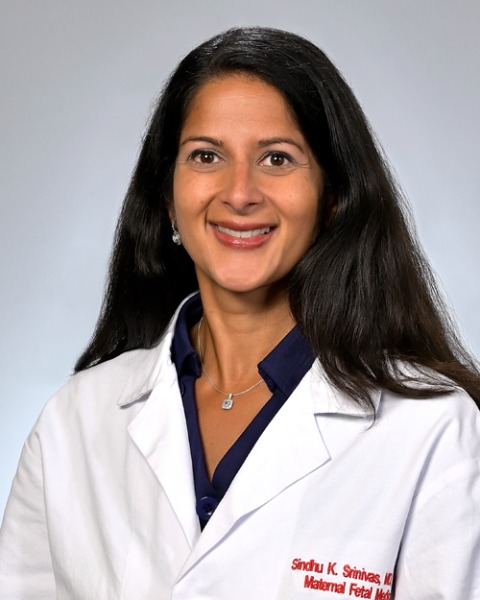
Sindhu K. Srinivas, MD, MSCE (she/her/hers)
Professor of Obstetrics and Gynecology/Maternal Fetal Medicine
Department of Obstetrics and Gynecology, Perelman School of Medicine, Pregnancy & Perinatal Research Center
Philadelphia, Pennsylvania, United States

Aaron B. Caughey, MD, PhD
Chair and Professor of Obstetrics and Gynecology
Oregon Health & Science University
Oregon Health & Science University, Oregon, United States

Alan T. Tita, MD, MPH, PhD (he/him/his)
Assoc. Dean for Global & Women’s Health; Chair & Director, Mary Heersink Inst. of Global Health
Center for Research in Women’s Health, University of Alabama at Birmingham
Birmingham, Alabama, United States
Methodius G. Tuuli, MBA, MD, MPH
Chace-Joukowsky Professor of Obstetrics and Gynecology, Chair of Obstetrics and Gynecology
Department of Obstetrics and Gynecology, Warren Alpert Medical School at Brown University, and Women & Infants Hospital of Rhode Island
Providence, Rhode Island, United States
George A. A. Macones, MD, MS, MSCE
Chair & Professor, Department of Women’s Health
Department of Women’s Health, Dell Medical School at the University of Texas at Austin
Austin, Texas, United States

Alison G. G. Cahill, MD, MSCI
Assoc. Dean, Translational Research; Prof, Women’s Health; Dir, Health Transformation Research Inst.
Department of Women’s Health, Dell Medical School at the University of Texas at Austin
Department of Women’s Health, Dell Medical School at the University of Texas at Austin, Texas, United States
Oxytocin, when used during labor, is often continued into the second stage, yet its relationship with postpartum hemorrhage risk is not known. We sought to evaluate the relationship between second stage oxytocin exposure and postpartum bleeding outcomes.
Study Design:
Secondary analysis of a multicenter randomized controlled trial of nulliparous women with term singleton pregnancies comparing immediate vs. delayed pushing in the second stage. In this study, the primary exposure was cumulative second stage oxytocin dose, calculated as the product of the infusion rate at complete cervical dilation (mU/min) and second stage duration (min). Patients were categorized as no, low, or high exposure, based on 50th percentile dose (680 mU; equivalent to a duration of 68 min at 10 mU/min). Exclusions were incomplete data or outlier values. The primary outcome was postpartum hemorrhage (PPH), defined as estimated blood loss ≥500 mL (vaginal) or ≥1000 mL (cesarean). Secondary outcomes included uterotonic use, transfusion, and a composite. Log-binomial regression estimated risk ratios (RRs) with 95% confidence intervals (CIs). Adjusted models controlled for primary trial group, induction, and prolonged second stage ( >3 hrs).
Results:
Of 2,404 patients in the parent trial, 1,772 were included. High-dose oxytocin was not associated with increased risk of PPH (aRR = 1.5; 95% CI: 0.9 - 2.4; p = 0.10), the composite outcome (aRR = 1.5; 95% CI: 0.9 - 2.4; p = 0.11), or uterotonic use (aRR = 1.3; 95% CI: 0.5 - 3.2; p = 0.58) versus no exposure. Low-dose exposure was not associated with increased risk for any outcome. In sensitivity analyses defining PPH as estimated blood loss ≥1000 mL, results remained consistent with no significant differences observed. Transfusion rates were low and did not differ significantly between groups.
Conclusion:
Both high and low dose oxytocin exposure in the second stage of labor were not associated with increased risk of maternal blood loss complications. Continuation of oxytocin into the second stage of labor does not appear to be an independent risk factor for postpartum hemorrhage.