







Poster Session 4
Category: Prematurity
Poster Session 4
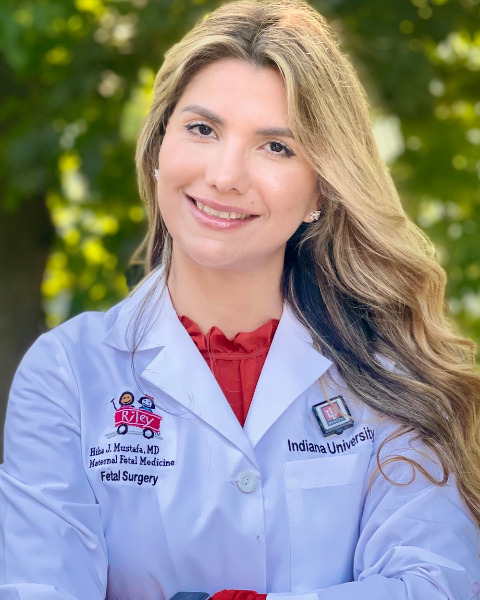
Hiba J. Mustafa, MD (she/her/hers)
Director of Fetal Surgery, Director of Placenta Accreta Spectrum Program
Indiana University School of Medicine, Riley Children's Hospital
Indianapolis, Indiana, United States
Faezeh Aghajani, MD
Postdoctoral Research Fellow
Boston Children's Hospital
Boston, Massachusetts, United States
Erez Lenchner, PhD
Biostatistics and Data Management
New York University Rory Meyers College of Nursing
New York, New York, United States

Moti Gulersen, MD, MSc
Assistant Professor
Thomas Jefferson University
PHILADELPHIA, Pennsylvania, United States

Vincenzo Berghella, MD (he/him/his)
Professor, Director
Thomas Jefferson University
Philadelphia, Pennsylvania, United States
.jpg "Alireza A. Shamshirsaz, MD (he/him/his) photo")
Alireza A. Shamshirsaz, MD (he/him/his)
Department Director, Professor of Surgery
Boston Children's Hospital, Harvard Medical School
Boston, Massachusetts, United States
To evaluate trends in antenatal corticosteroid (ACS) administration and compare neonatal outcomes in ACS-exposed versus unexposed twin pregnancies delivered between 22 and 25+6 weeks’ gestation.
Study Design:
We conducted a cross-sectional study using the National Center for Health Statistics and CDC natality dataset (2016–2022). Included were liveborn twin pregnancies delivered between 22 and 25+6 weeks; singletons, higher-order multiples, those with gestational age or ACS data missing, or outside this window were excluded. The primary outcome was neonatal survival; secondary outcomes included 10-minute Apgar score < 7, prolonged ventilation, surfactant therapy, suspected neonatal sepsis, and a composite adverse outcome (ventilation, Apgar < 7, or death). Associations were estimated with multivariable logistic regression.
Results:
Among 15,833 twin births, 6,982 (44%) were exposed to ACS and 8,851 (56%) were unexposed. ACS administration was associated with higher neonatal survival at 22–22+6 weeks (55.9% vs. 26.8%; aOR 3.66, 95% CI 2.95–4.55), 23–23+6 weeks (74.1% vs. 65.6%; aOR 1.53, 95% CI 1.30–1.79), and 24–25+6 weeks (85.4% vs. 82.2%; aOR 1.21, 95% CI 1.02–1.44). Odds of a 10-minute Apgar score < 7 were lower with ACS at 22–22+6 weeks (aOR 0.56, 95% CI 0.45–0.69), 23–23+6 weeks (aOR 0.84, 95% CI 0.72–0.98), and 24–25+6 weeks (aOR 0.68, 95% CI 0.58–0.80). Among neonates receiving active intervention (n=9,118), the survival benefit with ACS remained significant at 22 (aOR 2.5, 95% CI 1.77–3.54) and 23 weeks (aOR 1.56, 95% CI 1.26–1.94). From 2016–2022, ACS use increased significantly at all gestational ages, most markedly at 22 weeks (from 13.5% to 42.9%), with a notable rise after the 2021 ACOG advisory.
Conclusion:
ACS administration in periviable twin pregnancies is linked to improved survival and lower odds of adverse outcomes, especially at 22 and 23 weeks. Benefit persists among those receiving active postnatal care, supporting ACS use when intensive neonatal management is planned.